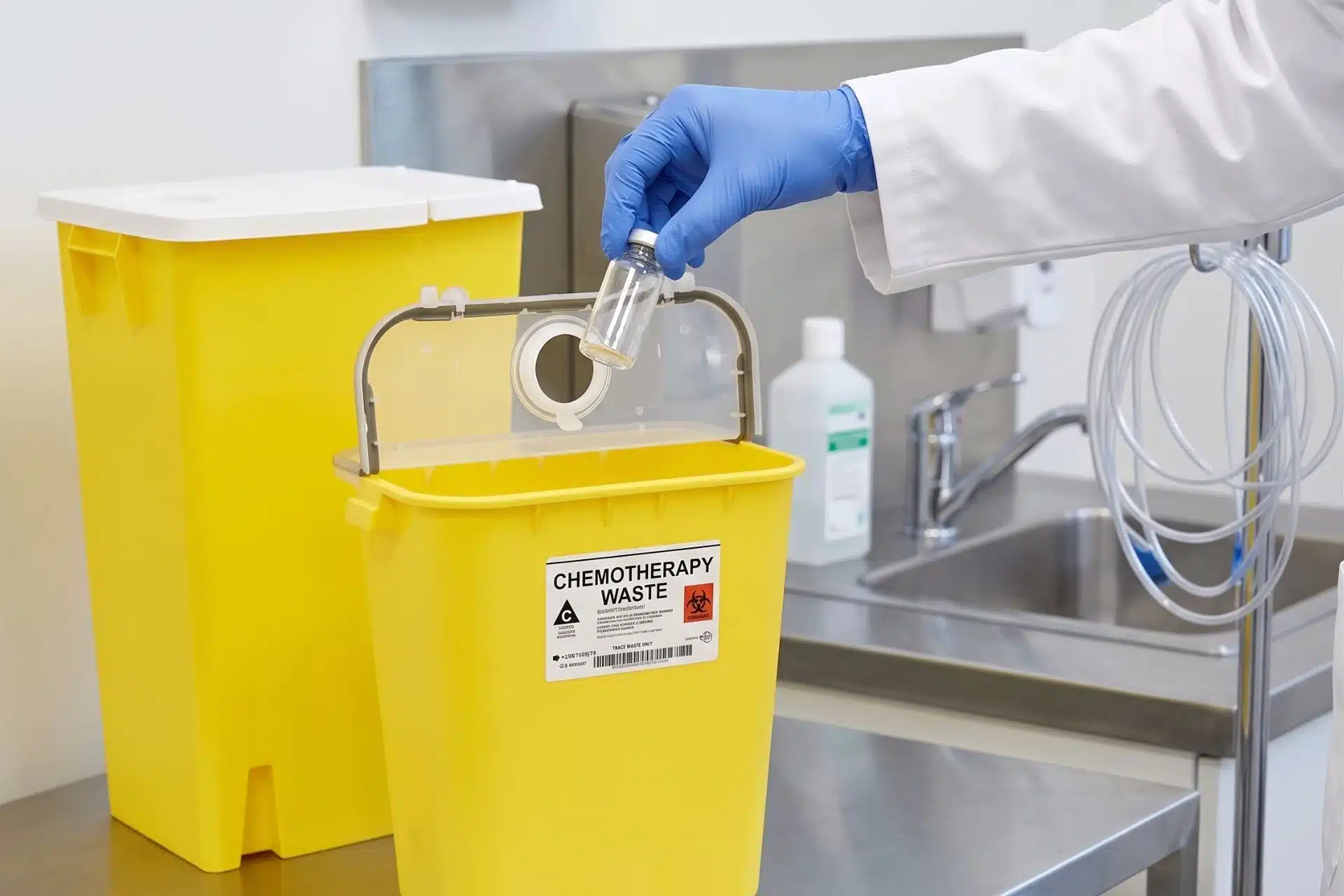
Trace chemotherapy waste is any item, such as used vials, gloves, or IV tubing, that is contaminated only with residual chemotherapy drug once it meets the EPA’s RCRA (Resource Conservation and Recovery Act) empty standard. Healthcare facilities must segregate it into yellow containers for compliant, ongoing waste disposal.
Trace chemotherapy waste refers to items lightly contaminated with small amounts of chemotherapy drug residue, such as empty vials, used gloves, IV tubing, or gowns, and may be classified as “RCRA empty” under EPA rules. Unlike bulk chemotherapy waste, trace chemotherapy waste requires yellow containers and specific handling steps, not standard regulated medical waste disposal.
If your clinic gives chemotherapy drugs, even once in a while or in small amounts, you may be producing trace chemotherapy waste. Many office managers think this is limited to oncology-only sites, but it may apply more widely.
Understanding the difference between trace waste and bulk chemo waste, and knowing how to manage each correctly, protects your facility from hazardous waste violations and keeps your staff and patients safe.
Trace Chemotherapy Waste vs. Bulk Chemotherapy Waste
The distinction between trace chemotherapy waste and bulk chemotherapy waste disposal comes down to how much drug residue remains, not to the type of item itself.
What Counts as Bulk Chemo Waste
Bulk chemotherapy waste includes items still holding a significant amount of the original chemotherapy drug, including:
- unused or expired chemotherapy medications
- partly filled IV therapy bags
- contaminated syringes
- supplies used to clean up a chemotherapy spill
Large-volume chemotherapy waste is considered hazardous waste and, in some cases, may be characteristic or listed hazardous waste depending on the drug, so it must be discarded in RCRA-rated containers under federal requirements.
What Counts as Trace Chemo Waste
Trace chemotherapy waste includes items that held or contacted chemotherapy drugs but have been emptied to the point where they meet the EPA’s RCRA empty standard. Common examples include:
- Empty chemotherapy drug vials
- Syringes and needles without notable residue
- Empty IV bags and tubing
- Bottles
- Gloves
- Towels
- Other personal protective equipment worn during drug preparation or administration
Because these items are considered contaminated only with residual amounts and may include items not visibly contaminated, they can’t go into standard medical waste or infectious waste streams.
Trace chemotherapy waste must be managed through a dedicated disposal pathway, in dedicated containers, and disposed of in accordance with state and federal regulations.
| Feature | Trace Chemotherapy Waste | Bulk Chemotherapy Waste |
| RCRA Status | RCRA Empty | Not RCRA Empty |
| Definition | Containers where all removable waste has been emptied per standard practice, with no more than 3% residue remaining by weight (for containers under 119 gallons), plus PPE and tubing. | Partially infused IV bags, unused/partially full vials, spill cleanup material, or bulk liquid. |
| Container Color | Yellow rigid containers/sharps bins. | Black rigid RCRA containers. |
| Final Treatment | Regulated high-temperature medical waste incineration. | Permitted EPA RCRA hazardous waste incineration. |
Which Facilities Generate Trace Chemotherapy Waste?
Trace chemotherapy waste isn’t limited to hospital oncology units. Any healthcare facility that prepares, administers, or handles chemotherapy agents generates this waste, often without realizing it falls under separate regulations from standard solid waste or medical waste.
Facilities That Commonly Generate Trace Chemo Waste
You may be generating trace chemotherapy waste if your facility includes any of the following:
- Oncology clinics and infusion centers
- Hospitals with oncology departments
- Veterinary clinics that treat cancer in animals
- Dermatology practices using certain topical chemotherapy treatments
- Ambulatory care centers administering chemotherapy drugs
- Nursing facilities and long-term care centers where residents receive chemotherapy treatments on-site
- Pharmacies that compound or dispense chemotherapy drugs
If your facility handles any of these drugs, even a small number of patients per month, you need a compliant plan to manage trace chemotherapy waste.
EPA and State Regulatory Requirements
Chemotherapy waste disposal falls under a mix of federal and state regulations, and the specific requirements can vary depending on where your facility operates.
Federal EPA Requirements
Under the Resource Conservation and Recovery Act (RCRA), certain chemotherapy drugs are classified as hazardous waste based on their toxicity and other characteristics. The EPA’s federal guidelines determine which drugs, including substances such as arsenic trioxide, require this classification and outline the standard a container must meet to be considered RCRA empty.
Facilities are responsible for correctly identifying which chemotherapy waste qualifies as trace versus bulk, since misclassification poses a compliance risk.
State-Level Variations
Many states layer additional requirements on top of federal EPA rules, including specific labeling requirements, storage time limits, and transportation and disposal documentation standards, such as those set by the Texas Commission on Environmental Quality (TCEQ) and the Oklahoma Department of Environmental Quality (ODEQ).
Since requirements differ by state, your facility needs a medical waste disposal partner who understands the specific regulations in your location, not a generic, one-size-fits-all approach.
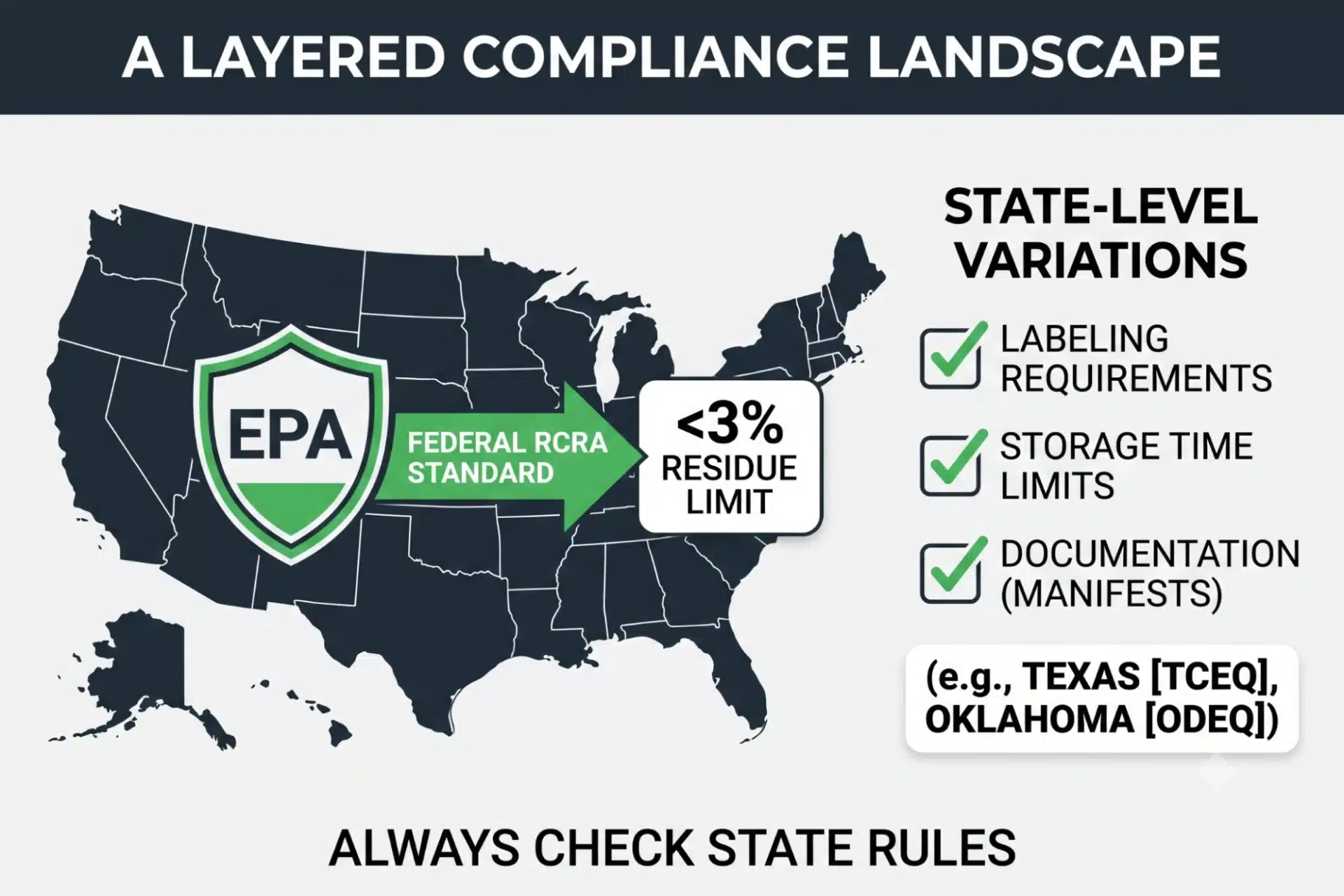
Image Source: Gemini 2026
Container and Segregation Requirements
Proper segregation is one of the most common compliance gaps facilities encounter with trace chemotherapy waste, often because staff aren’t trained to distinguish it from other types of medical waste.
Trace Chemo Waste Containers
Trace chemotherapy waste must be placed in containers specifically designated for this waste stream, typically yellow containers clearly marked for chemotherapy waste.
These containers are separate from red sharps containers, recycling bins, and standard regulated medical waste bins used for other materials.
Segregation Best Practices
Staff should be trained to segregate trace chemotherapy waste at the point of generation, meaning the container needs to be within reach wherever chemotherapy drugs are prepared or administered.
Mixing trace chemotherapy waste with regular medical waste, full bags of standard trash, or sharps containers creates a compliance risk and can compromise safe downstream management. Clear labeling, accessible container placement, and regular staff training in the safety practices around chemotherapy waste disposal all reduce the likelihood of segregation errors.
The Disposal Pathway for Trace Chemotherapy Waste
Once trace chemotherapy waste is properly segregated and contained, it receives a distinct treatment and final disposal process.
At your facility, chemotherapy waste is collected on a scheduled basis and transported by a licensed provider trained in its management. Many facilities rely on incineration for chemotherapy waste disposal because this treatment method is designed to prevent environmental contamination from remaining medication residues.
A dependable pickup schedule matters here, since trace chemotherapy waste sitting in a facility too long creates both a compliance issue and a safety concern for staff.
For a closer look at how this fits within your facility’s broader compliance obligations, visit our chemotherapy waste disposal page.
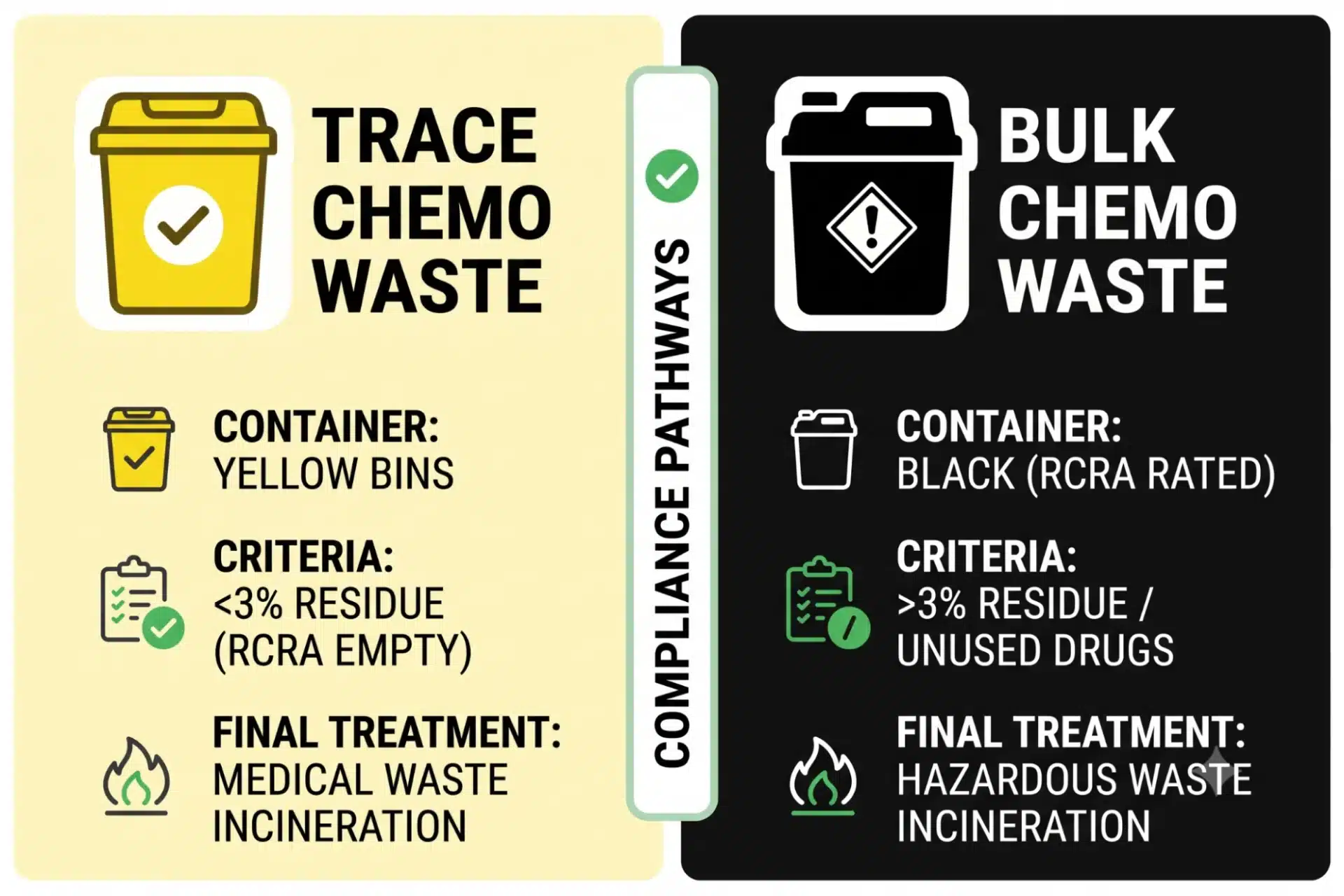
Image Source: Gemini 2026
FAQs About Chemotherapy Waste Disposal
Yes. Chemotherapy waste is cytotoxic and classified as hazardous waste. Even trace chemotherapy waste carries residual drug that creates risks through skin contact, inhalation, or improper disposal if not handled correctly.
Trace chemotherapy waste goes in yellow containers clearly labeled for chemotherapy waste. These are kept separate from red sharps containers and standard medical waste bins used for other materials.
Exposure to chemotherapy waste can cause skin absorption, inhalation of residue, or contamination through direct contact. This is why proper containers, labeling, and staff training in chemotherapy waste handling matter.
Examples include empty drug vials, used gloves, IV tubing and bags, syringes, gowns, and spill cleanup materials. Whether an item is considered trace or bulk chemotherapy waste depends on the amount of residual drug present.
Bulk chemotherapy waste contains a significant amount of hazardous drug residue, including unused drugs and spill materials. Trace chemotherapy waste refers to emptied items, such as vials or gloves, that meet the RCRA empty-container standard.
Any healthcare facility administering chemotherapy drugs generates this waste, including oncology clinics, hospitals, veterinary practices, dermatology offices, ambulatory care centers, long-term care facilities, and compounding pharmacies.
Key Takeaways
- Trace chemotherapy waste includes emptied items like vials, gloves, and IV tubing that meet the EPA’s RCRA empty standard
- Bulk chemotherapy waste retains significant drug residue and requires RCRA-rated containers as hazardous waste
- Trace chemotherapy waste must go in dedicated yellow containers, separate from medical waste and sharps bins
- Many facility types generate trace chemotherapy waste, not just oncology centers
- State regulations add requirements on top of the federal EPA hazardous waste rules
- Proper segregation and staff training reduce compliance risk around chemotherapy waste disposal
Partner With a Provider Who Understands Trace Chemo Waste
Trace chemotherapy waste compliance isn’t something your facility should navigate with guesswork or a generic waste provider unfamiliar with your specific drug volumes and state requirements. You need a partner who can help correctly classify the chemotherapy waste, provide the right containers, and manage a reliable disposal schedule tailored to your facility, on time, every time.
Biogenic Solutions works directly with clinics, hospitals, veterinary practices, and long-term care facilities to build compliant, personalized trace chemotherapy waste programs, backed by transparent, volume-based pricing and consistent service.
If your facility handles chemotherapy agents in any capacity, visit our chemotherapy waste service page to learn how we can help you stay compliant with confidence, as your dedicated compliance partner.